
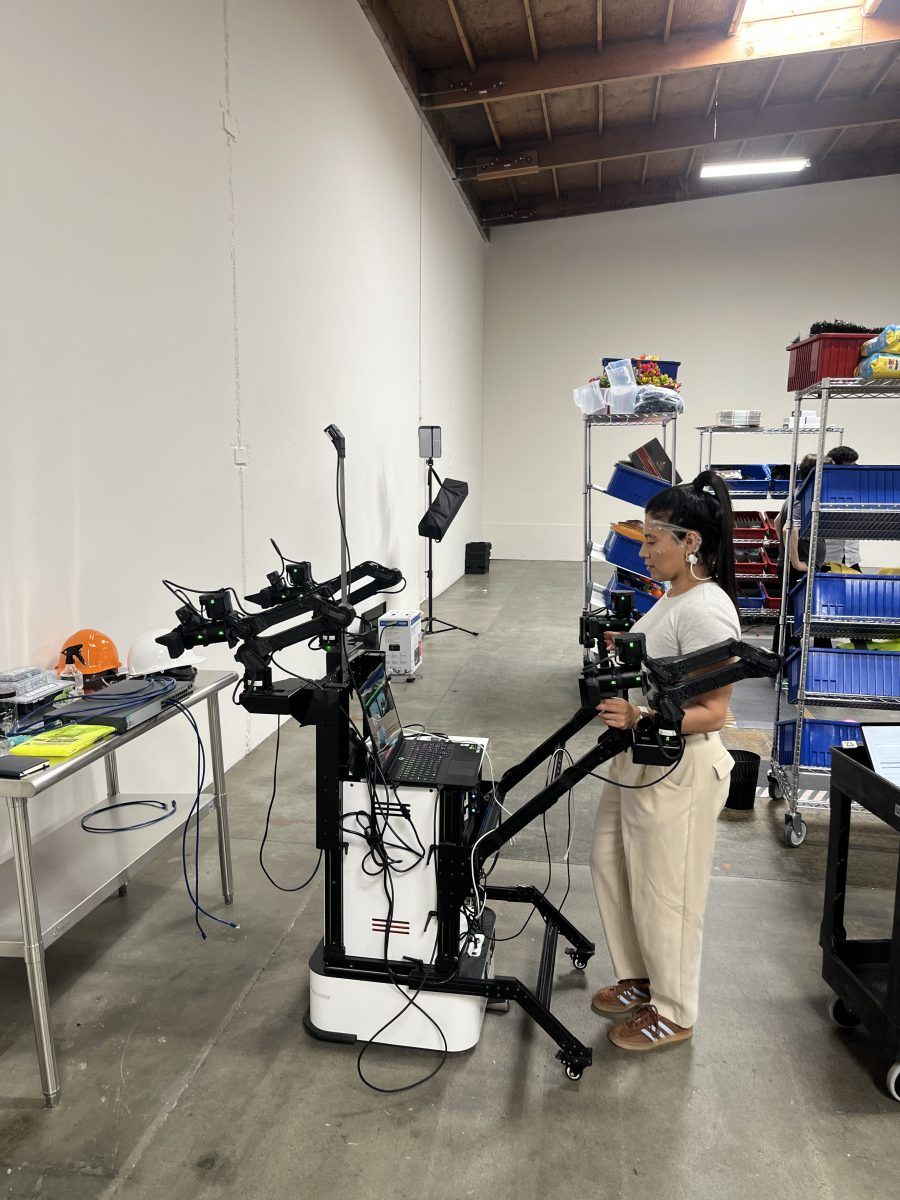
Encord, a data tooling company in San Leandro, California, is testing a new approach to physical AI training by using brain waves to enhance data collection. The company's innovative effort involves Andrew Ceja, a robotic trainer, using a headset with brain wave sensors to gather training data in a warehouse setting.
Enhancing Robotics with Brain Waves
Encord collaborates with Zander Labs, a German neuroscience startup, which believes brain activity can provide valuable insights for training AI models by identifying mental states like error and intent. This collaboration is part of a trial to determine the effectiveness of brain wave data in improving robotics models' performance.
Lucas Gehrke, a neuroscientist at Zander, notes that understanding brain activity during tasks could guide model builders in optimizing their AI models' performance levels.
Data Scarcity in AI Development
Encord's initiative addresses the challenge of limited real-world training data for robotics. According to Vineeth Velmurugan, Encord's head of robot learning, the company aims to produce its own training data to support end-to-end learning for robotic manipulation tasks. Velmurugan highlights that existing data sources are insufficient for the scale needed to advance physical AI.
Traditional methods, such as video training, lack the precision required for effective AI training. Velmurugan estimates that a dataset five times the size of YouTube's video corpus is necessary to achieve significant breakthroughs.
Exploring New Data Modalities
Encord is experimenting with various data collection methods, including egocentric video and remote robot operation. Their San Leandro facility serves as a testing ground for new modalities like brain waves and specific skill data sets for fine-tuning. The company also employs leader-follower rigs, where human-operated robotic arms create data by mimicking human actions in tasks like pouring coffee and stacking poker chips.
Velmurugan explains that dense annotation of data, which includes detailed physical descriptions, is significantly more valuable for AI training than less detailed ego data, despite being more expensive to produce.
Economic Challenges and Industry Insights
The cost of generating physical training data presents challenges, as it is substantially higher than text-based data from the internet. However, Velmurugan believes that the progress Encord observes in the industry, from startups to frontier labs, signals advancements in improving physical AI models.
Encord's position, working with multiple robotics companies, allows it to identify effective data techniques gaining traction. This insight is a key part of Encord's strategy to stay ahead in the AI data generation field.
Ceja and Sofia Infante, another pilot at Encord, are part of a growing workforce focused on developing the foundational data for neural networks. Ceja, who previously worked in waste management with robotic sorters, finds the dynamic nature of training tasks for robots engaging and challenging.
Source: https://techcrunch.com/2026/07/26/are-brain-waves-the-next-unlock-for-physical-ai/