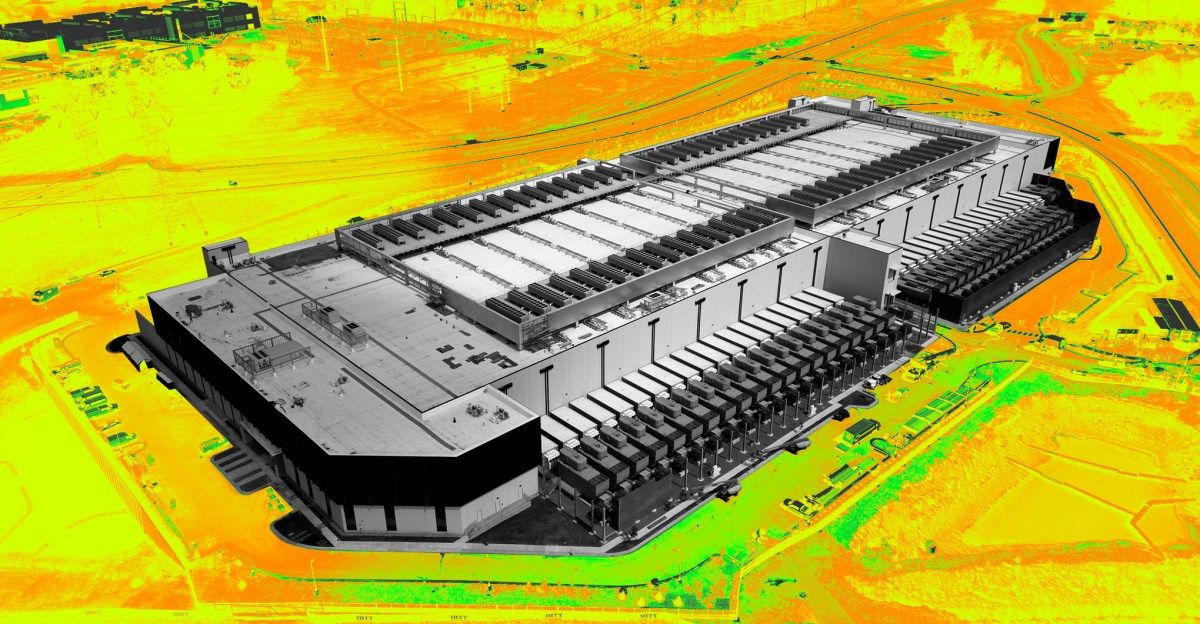

Utah's Stratos Project, slated to be one of the largest data centers globally, has sparked significant controversy following its approval by Box Elder County commissioners. Stretching across 40,000 acres in Hansel Valley, the project, backed by investor Kevin O'Leary, aims to establish U.S. AI dominance but raises environmental and resource concerns.
Massive Scale and Energy Demand
The Stratos Project will be over twice the size of Manhattan, requiring 9GW of power, nearly double Utah's peak electricity demand in 2025. Its initial phase exceeds $4 billion, according to Utah Money Watch. O'Leary promotes it as crucial for U.S. national defense and AI supremacy, stating it shows global competitors like China that the U.S. means business.
Despite receiving approval from Box Elder County and Governor Spencer Cox, the project still needs environmental and building permits. O'Leary's January meeting with Cox reportedly accelerated the approval process, and he confirmed favorable reception in a Facebook post. The project is in partnership with West GenCo and overlaps with Department of Defense land, including the Utah Test and Training Range, promising $49 million in annual property taxes for MIDA and infrastructure updates.
Environmental Concerns and Public Backlash
Data centers are under scrutiny nationwide for their impact on power grids, water supplies, and air pollution. The Stratos Project's on-site power plant, drawing methane from the Ruby Pipeline, poses significant environmental challenges. Utah Clean Energy warns that it could use 448 billion cubic feet of gas annually, exceeding the state's current use by 1.5 times. Physics professor Robert Davies highlights the thermal impact, comparing it to 23 atom bombs worth of energy daily, potentially raising local temperatures significantly.
The project could raise Utah's carbon emissions by 55%, producing 30.2 million tons of CO2 annually. The county promises a closed-loop water system to avoid diverting water from critical sources, yet details on its water source remain unclear after public objections led to a retracted application for Salt Wells Spring usage.
Political Reactions and Public Response
Utah officials have largely disregarded public protests, with Gov. Cox criticizing the slow pace of approvals in the U.S. as inefficient. Commissioner Boyd Bingham dismissed protesters during a county meeting, while O'Leary accused opponents of being influenced by China. Despite the backlash, a citizen group seeks a referendum to potentially reverse the data center's approval, challenging the influence of substantial investments with grassroots activism.
This ongoing debate over the Stratos Project signifies broader tensions around large-scale developments and their local impacts, underscoring the balance between technological advancement and environmental stewardship.
Source: https://www.theverge.com/ai-artificial-intelligence/933687/utah-stratos-project-data-center-kevin-oleary